
Android earning games have become extremely popular in 2026, especially among mobile users looking for simple ways to earn small rewards online. Many players download these apps expecting fast income, but few understand how Android earning games make money.
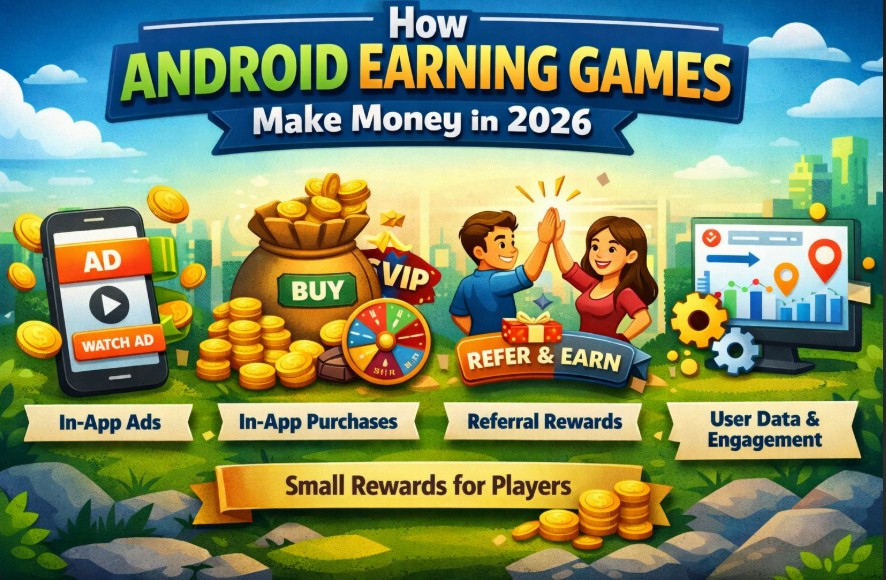
In reality, Android earning games operate like digital businesses. Their goal is to generate revenue through advertisements, in-app purchases, referral programs, and user engagement, while offering limited rewards to players. Understanding these revenue models helps users set realistic expectations and use these platforms safely.
This guide explains how Android earning games make money, why player earnings are usually limited, and how platforms sustain themselves over time.
Why Android Earning Games Are So Popular in 2026
The growth of smartphones and affordable internet in countries like Pakistan has made mobile gaming accessible to millions. Many Android apps now combine entertainment with reward systems to attract more users and keep them engaged for longer periods.
Most of these apps follow a “free-to-play” model, where the game is free to install but generates revenue through advertisements, optional purchases, and partnerships with other companies. Since players do not pay up front, these apps can quickly build a large user base.
In addition, these games offer fun features like daily challenges, level-ups, bonus rewards, and social sharing, which encourage players to spend more time in the app. This combination of fun, rewards, and easy access is why Android earning games have become extremely popular in 2026.
Understanding Revenue Through In-App Advertisements
Ads as the Primary Revenue Source
Advertisements are the most common way Android earning games make money. Apps display various ad types:
- Banner ads inside the game interface
- Full-screen interstitial ads between levels
- Rewarded video ads for bonus coins
Developers earn money whenever players view or interact with these ads.
Rewarded Ads and Player Engagement
Rewarded ads encourage users to stay longer in the app. Players receive coins or small bonuses for watching short ads, which increases engagement.
However, each ad generates only a small amount of revenue. Apps must maintain a large user base and carefully control payouts to stay profitable.
Earning Through In-App Purchases and Microtransactions
Many Android earning games offer optional purchases to enhance gameplay. These include:
- Game coins or tokens
- Boosters or extra spins
- Premium features or VIP access
- Faster progress in the game
This freemium model allows games to generate additional income. Industry data shows that in-app purchases account for a large share of mobile game revenue.
Referral Programs and User Growth Strategies
Referral systems are another way Android earning games make money. Players invite friends using a code.
When new users join:
- The platform gains more ad views
- Purchases increase
- Engagement metrics improve
Players usually receive small referral bonuses. This strategy helps apps grow rapidly with minimal marketing costs.
How User Engagement Adds Value to Android Earning Games
Time spent in the app, completed tasks, and user behavior data increase the app’s value for advertisers and partners.
Developers use this information to:
- Optimize ad placement
- Improve monetization strategies
- Target users with personalized offers
High engagement makes apps more profitable while still giving small rewards to players.
Why Player Earnings Are Limited in Android Earning Games
Many players expect earning games to provide a large income, but revenue depends on ads, purchases, and partnerships. Platforms must cover:
- Developer costs
- Server and maintenance
- Marketing expenses
- Platform fees
Therefore, only a small portion of revenue is distributed as rewards. Limits include:
- Minimum withdrawal amounts
- Daily reward caps
- Task restrictions
Why Some Android Earning Games Stop Paying
Apps may reduce rewards or shut down when:
- Advertising demand decreases
- User activity drops
- The platform becomes unprofitable
Not all cases are scams—some apps fail due to business challenges in the competitive mobile gaming market.
Pros and Cons of Android Earning Games
Pros:
- Easy access on Android smartphones
- Simple gameplay for beginners
- Small rewards possible via ads and tasks
- No special skills required
- Works on most budget devices
Cons:
- Earnings are usually very small
- Frequent advertisements
- Some platforms stop paying
- Withdrawal conditions may be strict
- Not suitable as a full-time income source
Comparison: Player Expectations vs Reality in Android Earning Games
| Aspect | Player Expectation | Actual Reality |
|---|---|---|
| Earnings | High daily income | Small rewards |
| Effort | Short playtime | Long engagement required |
| Withdrawals | Instant payouts | Minimum limits |
| Stability | Long-term income | Apps may shut down |
| Risk | No risk | Moderate risk |
Frequently Asked Questions (FAQ) About Android Earning Games
Some apps provide small rewards, but they are primarily for entertainment and ad engagement.
Ads are the main revenue source. Player rewards come from a portion of this ad income.
No, most cannot. Rewards are limited by the platform’s revenue.
Depositing money carries risk. Test the app first and understand withdrawal rules.
Conclusion: How Android Earning Games Make Money
In 2026, Android earning games make money mainly through ads, in-app purchases, referrals, and user engagement data. Players get a small part of this money as a reward. These games ask users to do simple tasks, watch ads, or share the app to earn coins, points, or cash. They use fun features like daily challenges, level-ups, and bonus rewards to keep players playing. By knowing how these games work, users can earn safely, avoid unrealistic expectations, save time, and enjoy mobile gaming more while getting the best rewards responsibly.